Expert Event Logistics for Austria's Cultural Scene
From intimate cultural gatherings to large-scale festivals, we coordinate every detail so your event runs seamlessly.
Start Your Project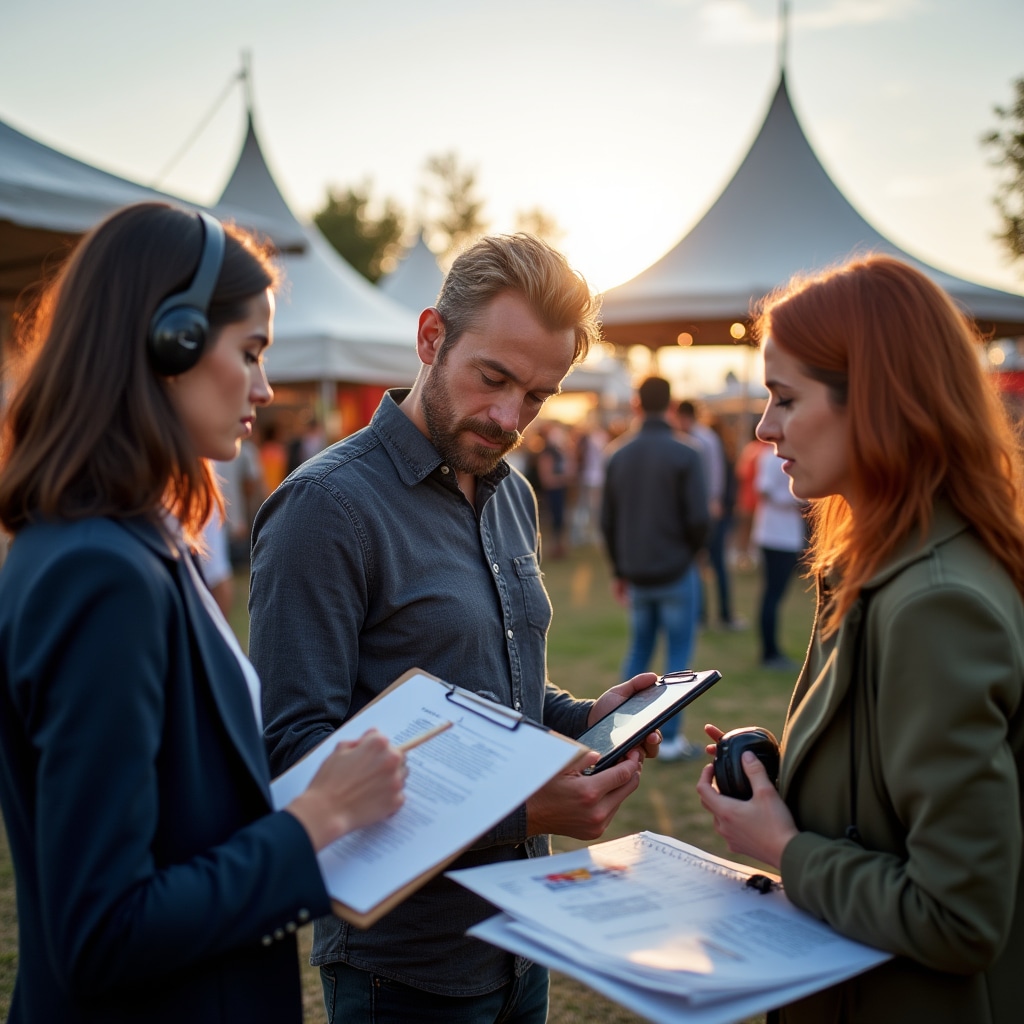
From intimate cultural gatherings to large-scale festivals, we coordinate every detail so your event runs seamlessly.
Start Your Project
Detailed timeline development from initial concept through event conclusion, ensuring every activity flows smoothly.
Complete handling of Austrian regulatory requirements, permits, and compliance documentation for events of all sizes.
Sound, lighting, staging, and equipment logistics managed by experienced technical coordinators.
Recruitment, training, scheduling, and management of volunteer teams to support your cultural initiative.
Cultural festivals and local initiatives bring communities together, but the operational complexity can overwhelm organizers. Professional coordination ensures your vision becomes reality.
We understand the unique needs of cultural organizations—limited budgets, volunteer-driven operations, and community impact goals. Our services adapt to your specific context while maintaining professional standards.
Austria's festival landscape includes everything from village celebrations to regional arts gatherings. Each requires different logistical approaches, vendor relationships, and regulatory navigation.
Event success depends on hundreds of interconnected details. We manage the complete operational picture so you can focus on programming, artistic direction, and community connection.
A structured approach that brings clarity to complex event logistics
We begin by understanding your event vision, objectives, audience, and constraints. This conversation establishes the foundation for all subsequent planning and helps identify potential challenges early.
Development of comprehensive event timelines, resource allocation plans, and contingency strategies. We map dependencies, identify critical paths, and establish clear milestones.
Permit applications, safety documentation, insurance requirements, and compliance with Austrian event regulations. We handle the bureaucratic complexity so you don't have to.
Volunteer recruitment, training programs, role assignments, and communication systems. We build and manage the human infrastructure that makes events function.
On-site coordination during the event, real-time problem solving, vendor management, and schedule adherence. We're present throughout to ensure smooth operations.
Answers to questions we frequently hear from cultural organizers
For small cultural events, three to four months provides adequate planning time. Medium-sized festivals benefit from six months of preparation, while large-scale events often require a year or more. Earlier engagement allows more vendor options, better permit processing, and thorough volunteer training. However, we've successfully coordinated events on shorter timelines when necessary.
Requirements vary by location and event scale, but commonly include event permits from local authorities, noise permits for amplified sound, food service permits if serving meals, alcohol licenses if applicable, and temporary structure approvals for stages or tents. Some municipalities require traffic management plans or security concepts. We navigate these requirements based on your specific event details and location.
Absolutely. Many cultural initiatives have dedicated volunteer groups with deep community connections. We integrate with existing teams, providing structure, training, and coordination frameworks that enhance their effectiveness. Our role is to support and organize, not replace, the community involvement that makes cultural events meaningful.
Outdoor events require careful technical planning around power supply, weather protection, and acoustic considerations. We coordinate with technical vendors, arrange generator or grid power connections, plan equipment protection strategies, and develop contingency approaches for weather challenges. Site assessments inform technical specifications, ensuring appropriate equipment for your venue.
Weather contingency planning is standard in our coordination process. We develop alternative scenarios, establish decision-making protocols, arrange backup indoor spaces when possible, and create communication plans for attendees. While we can't control weather, thorough preparation minimizes disruption and maintains safety as the top priority.
Yes, and recurring events benefit significantly from continuity in coordination. We develop institutional knowledge about your specific event, maintain vendor relationships year-round, refine processes based on previous experience, and create documentation that improves with each iteration. Many of our client relationships span multiple years and events.
Key areas of event coordination explained
Comprehensive schedules map every task from initial planning through post-event breakdown. We identify dependencies, allocate realistic timeframes, and build buffer periods for unexpected challenges. Detailed timelines keep all stakeholders aligned and prevent last-minute scrambling.
Events require coordination with catering companies, equipment rental firms, security services, and technical providers. We handle vendor selection, contract negotiation, delivery scheduling, and on-site liaison. Strong vendor relationships often mean better service and pricing.
Safety concepts address crowd management, emergency procedures, medical support, and evacuation protocols. Austrian authorities require documented safety plans for public events. We develop appropriate safety frameworks based on event size, venue, and activities.
Cultural initiatives often operate with limited funding. We help maximize impact within budget constraints through strategic vendor selection, efficient resource allocation, and identification of potential cost savings. Transparent budget tracking prevents financial surprises.
Effective events require clear communication among organizers, volunteers, vendors, and participants. We establish communication protocols, provide coordination tools, and ensure information flows efficiently before, during, and after the event.
Learning from each event improves future iterations. We facilitate debriefing sessions, gather feedback from stakeholders, document lessons learned, and provide recommendations. This evaluation process builds organizational knowledge and continuous improvement.
Let's discuss how professional logistics coordination can support your cultural initiative or festival